
The First Sip: Understanding Gateway Drugs and Why They Matter
The First Sip: Understanding Gateway Drugs and Why They Matter
The Innocent Beginning
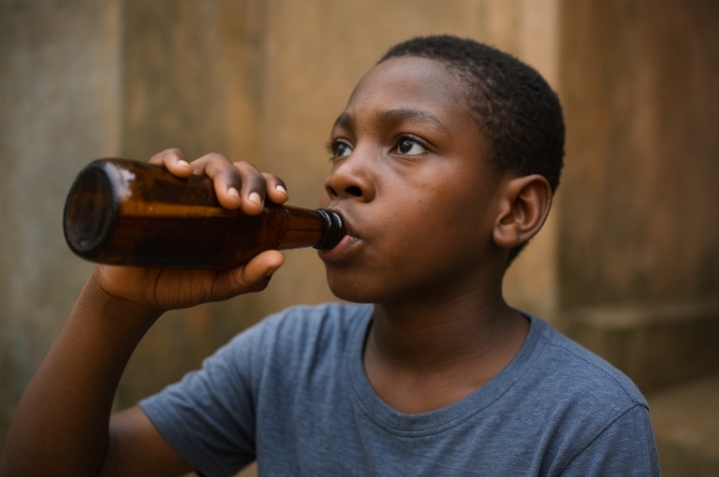
Chidi was twelve when he took his first sip of beer.
It was a hot Sunday afternoon in Enugu, and the men in his compound sat outside with crates of cold drinks, clinking bottles in laughter.
He had been sent to fetch another round from the nearby kiosk. One man winked, handed him a half-finished bottle, and said, “Be a man, try it.”
The liquid was bitter, far from the sweetness of the Fanta he preferred.
He grimaced, but the men cheered. That cheer mattered more than the taste.
It was his first brush with what experts call a gateway drug a seemingly harmless substance that opens the door to riskier behaviour.
At the time, Chidi did not know this word.
All he knew was that the men he admired clapped for him, and that he wanted to feel grown up again.
The Lure of Acceptance
By fourteen, beer had become normal. He drank secretly with friends after football matches, hiding bottles in nylon bags.
At school, a boy introduced him to cigarettes. “It helps you relax,” the boy whispered, puffing.
Chidi coughed, but again, the laughter and the sense of belonging pulled him in.
Cigarettes are another classic gateway drug; legal, accessible, and socially tolerated in many circles.
Public health experts argue that substances like alcohol, tobacco, and cannabis often lower inhibitions, alter brain chemistry, and prime young people for stronger drugs.
For Chidi, it was never about addiction at first. It was about belonging.
He wanted to be seen as bold, daring, and fun. The cigarette in his hand made him feel like he had crossed a line into manhood.
The Slippery Slope
By the time he was in university, Chidi had tried cannabis. At a party, someone rolled a joint and passed it around.
He hesitated, but the smell was everywhere, the music was loud, and he didn’t want to look like the “church boy” his mates teased him for being.
The first drag made his head spin, the second made him laugh uncontrollably. By the third, he felt weightless, his worries floating away like smoke rings.
He told himself it was harmless after all, many classmates swore cannabis was “natural” and even “medicinal.” But for Chidi, cannabis was not an end.
It was another doorway. Soon, he was experimenting with tramadol during exam weeks to stay awake, then with codeine cough syrup to sleep.
Each step felt small, each decision justified. But looking back, he could trace it all to that first sip of beer at twelve.
The Cost of Curiosity
Chidi’s grades dropped. His mother complained that his eyes were always red, his money always short.
He lied more than he told the truth, selling his phone once just to fund a weekend high.
The gateway had become a tunnel, and he was being dragged further inside.
Science explains it this way: when young people use substances like alcohol or nicotine early, their brains, still developing, are rewired to crave pleasure and relief from chemicals. This makes it easier to escalate to stronger drugs.
Not everyone who tries beer will end up on cocaine, but the risk multiplies.
For Chidi, the warning signs were there, but no one around him knew what “gateway drugs” meant.
To his parents, beer was “just beer.” To his friends, codeine was “just cough syrup.” By the time the family realised, he was in too deep.
Hitting Rock Bottom
The turning point came in his third year at university. Chidi collapsed during a night out, his body shaking uncontrollably.
He woke up in a clinic, with a doctor explaining that his liver was showing early signs of damage.
His mother sat by his bedside, tears in her eyes. She whispered, “Chidi, is this how I raised you?”
That question pierced him more than the needles in his veins.
He realised, perhaps for the first time, that what had started as innocent curiosity was threatening his very life.
Finding a Way Back
Recovery was slow. Chidi joined a support group where other young people shared their stories, stories that sounded eerily like his own.
A boy who started with shisha and ended up on crystal meth.
A girl who first tasted wine at fourteen and was later hooked on codeine.
In those circles, Chidi learnt that gateway drugs matter because they normalise drug use.
They blur the line between fun and danger, between recreation and addiction.
He began to rebuild: therapy, healthier friendships, volunteering with drug-free campaigns.
Each day was a fight, but each small victory felt like reclaiming his future.
The Bigger Picture
Chidi’s story is not unique. Across Nigeria and beyond, countless young people stumble onto this path without realising where it leads.
Research shows that early use of substances like alcohol, cigarettes, and cannabis greatly increases the likelihood of experimenting with harder drugs later.
Cultural acceptance, peer pressure, and lack of awareness make the risk even greater.
This is why conversations about gateway drugs are crucial. Not to shame, but to educate. Not to criminalise curiosity, but to protect futures.
Why It Matters
When we understand gateway drugs, we understand prevention. We learn that:
Early intervention saves lives.
Small choices can spiral into lifelong struggles.
Communities must speak openly about drugs, not in whispers or denial.
For Balm for the Bruised Foundation, stories like Chidi’s are more than cautionary tales.
They are reminders that every sip, puff, or pill taken in innocence can carry consequences unseen.
And they are calls to action for parents, schools, policymakers, and young people themselves, to look beyond the moment and see the future at stake.
A Voice of Hope
Chidi now shares his story in schools. He tells children not just to “say no,” but to understand why.
“When I was your age, I thought one sip meant nothing,” he tells them. “But one sip was a door. Once it opened, it was hard to close. Don’t even knock on it.”
His voice trembles sometimes, but his message is steady. Gateway drugs matter because the smallest beginnings can lead to the hardest endings.
And perhaps, in telling his truth, another twelve-year-old somewhere will think twice before reaching for that first bottle.
About author

You might also like
WHEN THE VILLAGE ROSE AGAIN – HOW COMMUNITY LOVE BECAME THE LIFELINE
WHEN THE VILLAGE ROSE AGAIN – HOW COMMUNITY LOVE BECAME THE LIFELINE In the quiet settlement of Umuowa, where red earth paths wind between rows of mud-brick houses, hope once

TRUE-LIFE STORY: “THE DAY THE POLICE KNOCKED WITH KINDNESS”
TRUE-LIFE STORY: “THE DAY THE POLICE KNOCKED WITH KINDNESS” When the knock came at 2 a.m., Ada’s heart leapt into her throat. Her first instinct was fear, not of thieves,


HOLDING ON TO HOPE: SUPPORTING A LOVED ONE THROUGH RECOVERY
HOLDING ON TO HOPE: SUPPORTING A LOVED ONE THROUGH RECOVERY When Ada’s brother, Chike, spiralled into depression after losing his job, the family didn’t know how to help. Once the
0 Comments
No Comments Yet!
You can be first to comment this post!