

THE NIGHT THE DRUMS FELL SILENT
THE NIGHT THE DRUMS FELL SILENT
It was a small satellite community in the Federal Capital Territory, Abuja, by day, the streets rang with children’s laughter, and by night, with the sound of drums, women trading stories, and elders passing wisdom.
But in recent years, something had stolen the life out of that rhythm.
Drug abuse.
Not the faraway kind you hear about in news bulletins. This was too close. It was the boy next door, the girl who once sang in the choir, the young man whose hands once tilled the soil.
The Boy Called Chike
Chike had been the pride of his street. Bright eyes, clever mind, a smile that melted hearts. His mother used to say, “He will be the first engineer in this family.”
But somewhere along the way, he fell into the grip of codeine. At first, no one noticed.
The elders thought his constant sleepiness was just tiredness. His friends laughed off his mood swings.
It wasn’t until he sold his father’s only radio, a radio the old man had used to listen to the BBC News Service every morning, that the alarm rang.
The community whispered. Some said it was peer influence. Others blamed unemployment. But his mother wept and asked, “Where were the people who raised him?”
The Silence of Leaders
In many Nigerian communities, leaders are revered. They settle disputes, bless marriages, and stand as custodians of tradition.
Yet, when drug abuse crept in, many chose silence. Some said it was a family matter. Others feared it was beyond their control.
But the truth? Silence costs lives.
By the time the elders realised the depth of the crisis, two youths had overdosed in the village, and dozens more were battling addiction in secret.
The Turning Point
One evening, after yet another funeral of a 21-year-old girl lost to crystal meth, the village square filled. The leaders, the mothers, the fathers, and even the young people gathered.
It was no longer a problem that could be ignored.
Chief Okafor, the oldest man in the community, stood with trembling hands.
His voice cracked as he spoke: “If we, the custodians of this land, do nothing, we are accomplices to the death of our children.
This is not only their fight. It is our fight.”
That night became known as “The Night the Drums Fell Silent.” No music, no laughter only truth.
What They Did
The leaders decided to act. And they acted in ways that changed the story
Education with Authority. They began holding community dialogues.
Not the usual dry lectures, but storytelling evenings where survivors of drug abuse shared their journeys.
Now in recovery, Chike told his peers how quickly one bottle of syrup turned into chains around his life.
Sacred Spaces as Safe Spaces, Religious leaders opened mosques and churches for counselling sessions.
Traditional chiefs dedicated village halls as “recovery rooms” where young people could speak without shame.
Mentorship Circles Instead of scolding, elders paired troubled youths with artisans, farmers, and businesspeople. Slowly, the young began to see value in themselves again.
A Vow of Watchfulness.
They refused to be silent again. When they noticed the signs of red eyes, sudden aggression, and missing items in homes, they intervened with compassion rather than condemnation.
The Human Truth
The fight against drug abuse is not just about law enforcement or health facilities. It is about love, presence, and courage.
Communities that watch in silence bury their children in silence. Communities that act in unity raise their children in dignity.
Today, in that small Abuja community, the drums beat again. Not because the problem has disappeared, but because the people led by their leaders, have chosen to confront it head-on.
Mothers no longer weep alone. Fathers no longer shrug helplessly.
Leaders no longer hide behind tradition. Instead, they stand, hands joined, declaring: “We will not lose another child to silence.”.
Every community has a Chike. Every street has a child at risk.
Leaders, whether traditional, religious, or civic, hold the key to turning despair into hope. Their voices carry weight.
Their actions shape culture.
If they choose silence, the cycle continues. But if they rise with courage, compassion, and conviction, they can save lives.
So, the question lingers: When the drums fall silent in your community, will your leaders rise to restore the music, or will they allow the silence to bury another child?
About author

You might also like

THE SILENT BILL: COUNTING THE ECONOMIC COST OF DRUG ADDICTION IN AFRICA
THE SILENT BILL: COUNTING THE ECONOMIC COST OF DRUG ADDICTION IN AFRICA At first glance, Daniel looked like any other young man in his mid-twenties, bright-eyed, charming, and full of

THE SILENT KILLER, DOMESTIC VIOLENCE
THE SILENT KILLER, DOMESTIC VIOLENCE She covered her scars with makeup… but nothing could hide the pain in her eyes. Amaka looked like the perfect wife in public. Smiling. Quiet.
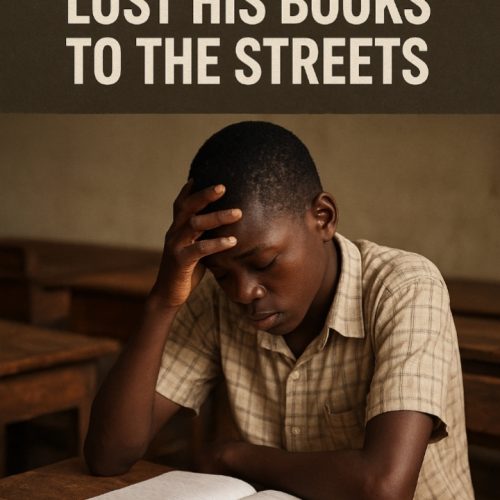

WHEN CHINEDU LOST HIS BOOKS TO THE STREETS
WHEN CHINEDU LOST HIS BOOKS TO THE STREETS Chinedu was once the pride of his secondary school in Enugu. Bright, ambitious, and with dreams of becoming an engineer, he topped
0 Comments
No Comments Yet!
You can be first to comment this post!