

WHEN A SON IS LOST, A COMMUNITY BLEEDS
WHEN A SON IS LOST, A COMMUNITY BLEEDS
In the heart of a bustling Nigerian neighbourhood, Amaka still sets a plate at the table for her first son, Chijioke.
It is an unconscious ritual one born of grief, denial, and hope.
Chijioke was not lost to war or accident; he was lost to the silent war that rages in our streets every day, drug abuse.
At 17, he was brilliant, with dreams of becoming an engineer. But curiosity became companionship, and companionship became addiction. It started with “just one puff” shared with friends in a corner.
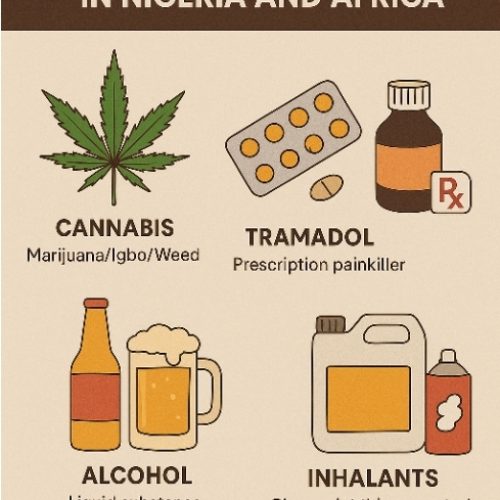
Before long, cannabis gave way to stronger substances, codeine syrups, tramadol, and eventually crystal meth also known as mkpuru mmiri.
His body withered, his laughter vanished, and his once-promising future disappeared into the haze of drugs.
The toll was not just on Amaka’s family. The neighbours whispered, the community watched.
Small thefts began phones, money, even his younger sister’s school fees. Trust eroded. At night, mothers locked their doors a little tighter, fathers walked home with suspicion in their eyes.
The ripple effect of Chijioke’s addiction spread like wildfire, consuming the peace of an entire street.
Then came the breaking point. One evening, Chijioke staggered home, eyes bloodshot, fists clenched. He demanded money. When his mother refused, he lashed out against the very hands that once fed him.
That night, Amaka wept not just for her son, but for the boy she no longer recognised.
Chijioke’s story is not isolated. Across Nigeria, countless families live this nightmare. Drug abuse is no longer “their problem” it is our collective wound.
It cripples education when children drop out.
It fuels crime as desperation grows. It weakens health systems, fills prisons, and destabilises communities.
Yet, behind every statistic is a face like Chijioke’s. A young person full of potential, derailed not by weakness but by circumstances peer pressure, unemployment, lack of guidance, and a society that stigmatises rather than rehabilitates.
At Balm for the Bruised Foundation, we have seen these stories unfold too many times. We have sat with grieving mothers, counselled broken fathers, and held the trembling hands of young people desperate for a way out. And what they need most is not judgment, but support, education, and action.
Drug abuse is not just a moral failing it is a health crisis, a social crisis, and a leadership crisis. Every parent, teacher, community leader, and policymaker has a role to play.
So, the question is: How many more Chijiokes must we lose before we act?
The time to speak is now. The time to educate is now. The time to heal is now.
Let’s continue this conversation. What practical steps do you believe families, communities, and government must take to break the cycle of drug abuse? Share your thoughts.
About author

You might also like

The First Sip: Understanding Gateway Drugs and Why They Matter
The First Sip: Understanding Gateway Drugs and Why They Matter The Innocent Beginning Chidi was twelve when he took his first sip of beer. It was a hot Sunday afternoon

Balm For The Bruised Foundation Represented As Organisations Collaborate To Ensure Gender Inclusion In Nigeria
Balm For The Bruised Foundation Represented As Organisations Collaborate To Ensure Gender Inclusion In Nigeria Adaora Ezeaka Abuja The gender inclusion journey started as early as 1975 when

Shadows We Inhale: The Untold Stories Of Substance Abuse In Nigeria and Africa
Shadows We Inhale: The Untold Stories Of Substance Abuse In Nigeria and Africa It began with a puff. Just one, and he told himself it would never happen again. Chinedu
0 Comments
No Comments Yet!
You can be first to comment this post!