
DRUGS AND WORKPLACE ACCIDENTS: THE SILENT HAZARD WE DON’T TALK ABOUT
DRUGS AND WORKPLACE ACCIDENTS: THE SILENT HAZARD WE DON’T TALK ABOUT
On a rainy Tuesday morning in Abuja, Chike* tightened his safety helmet, wiped his face with the back of his hand, and prepared to start another day on the construction site.
To his colleagues, he was hardworking, cheerful, and reliable.
What most of them didn’t know was that behind his quick smile, Chike was battling an addiction that had quietly taken over his life.
Like many others in high-risk jobs, Chike had turned to drugs, not for pleasure, but for “strength.”
A cocktail of painkillers and stimulants gave him the energy to push through the long hours, the heavy lifting, and the little sleep.
“It helps me work faster,” he once told a co-worker, shrugging off concerns.
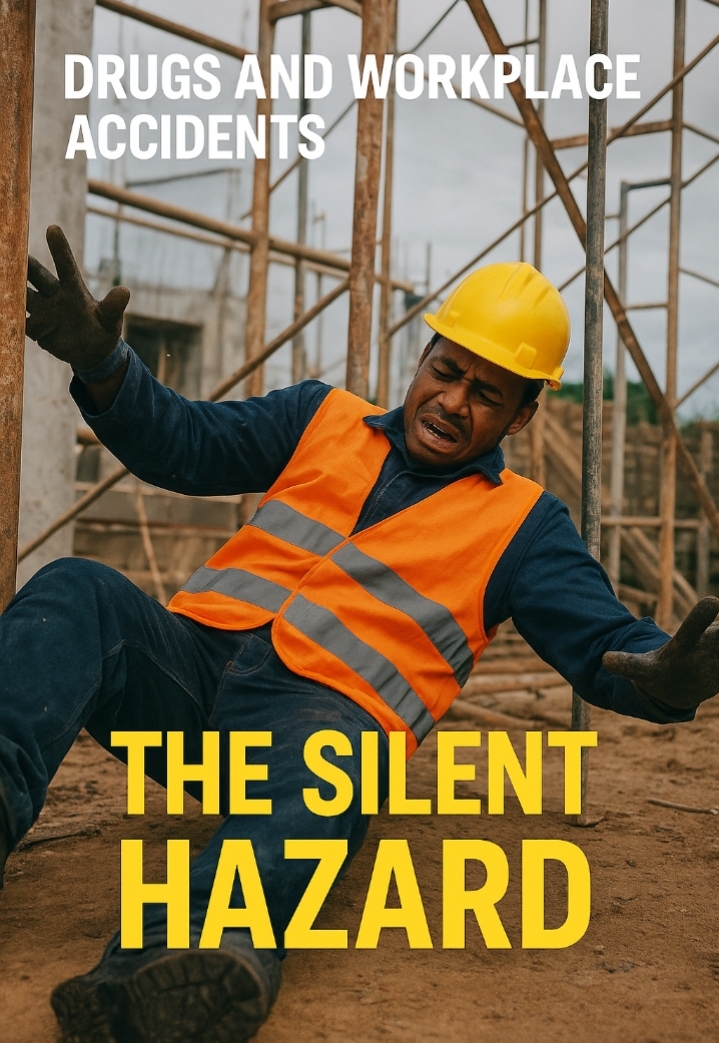
But that Tuesday was different. One moment, Chike was climbing the scaffold; the next, his grip slipped. In a split second, he fell, leaving his colleagues frozen in shock.
The doctors later revealed that the substances in his system had dulled his reflexes and blurred his coordination.
What was meant to make him stronger had betrayed him, turning his workplace into a death trap.
Sadly, Chike’s story is not unique. Across Nigeria and beyond, drugs are becoming the silent hazard in workplaces.
They don’t just affect the individual, they endanger everyone on the team.
From factories to transport companies, hospitals to offices, the rising use of drugs and alcohol among workers is fuelling accidents, lowering productivity, and silently tearing families apart.
Experts say workplace accidents linked to drugs are grossly underreported. In environments where speaking up means risking your job, many stay quiet.
Yet, the cost is enormous: broken bones, broken families, and in too many cases, lives cut short.
Behind every statistic is a human being, someone’s father, sister, son, or friend.
The truth is, addiction doesn’t start with a craving; it often starts with stress, fatigue, and the desperate search for relief.
The pressure to perform, to meet targets, and to survive in a harsh economy pushes workers to find shortcuts. But in the end, these shortcuts cut deeper than anyone imagines.
The silence around drugs and workplace accidents must end.
Employers must create safe spaces for conversations, provide counselling, and implement strict safety checks.
Colleagues must look out for one another, not with judgment, but with compassion.
Governments and civil society must treat this as a public health crisis, not a moral failing.
Chike’s fall is a reminder that what we don’t talk about can hurt us the most.
The next accident might not make the news but it will leave another family grieving, another workplace shaken, and another community asking: could this have been prevented?
It’s time we stop whispering and start acting. Because until we confront drugs as the silent hazard they are, every workplace remains one slip away from tragedy.
*Name changed to protect identity
What do you think? Should workplaces be more proactive about drug-related risks? Share your thoughts below and let’s spark a conversation that could save lives.
About author

You might also like

Improving The Mental Health Of Widows Through Giving
Improving The Mental Health Of Widows Through Giving Oftentimes, widows owing to the loss of a husband and sometimes, the ill treatment from their late husband’s relatives, become drug

Balm For the Bruised Foundation Holds 2-days Interactive Sessions with StudentsInternational Day Against Drug Abuse, Illicit Trafficking
In commemoration of the International Day Against Drug Abuse and Illicit Trafficking, BALM FOR THE BRUISED FOUNDATION, in conjunction with Standard Secondary School Ichi, had a 2-day interactive sessions with

Special Report: BFBF August Meeting Sensitization On Drug Abuse, Rape, Human trafficking Records Success
The 2022 August Meeting Sensitiztion/Awareness Creation Campaign of the Balm For The Bruised Foundation (BFBF) in some selected towns of towns of Anambra state has been concluded amidst success stories
0 Comments
No Comments Yet!
You can be first to comment this post!