
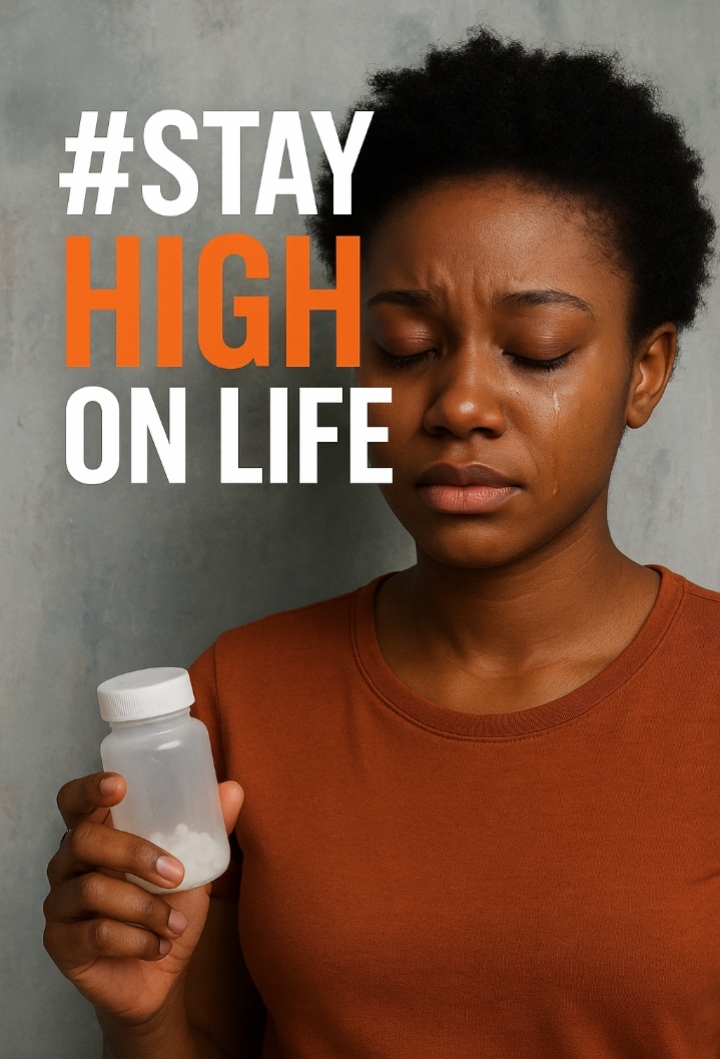
TRUE-LIFE STORY: “#HIGHONLIFE – HOW A SOCIAL MEDIA CHALLENGE SAVED MY FRIEND
TRUE-LIFE STORY: “#HIGHONLIFE – HOW A SOCIAL MEDIA CHALLENGE SAVED MY FRIEND
A Balm for the Bruised Foundation Story
When Adaeze posted a shaky video on TikTok one humid afternoon, none of us expected it would change our lives.
It wasn’t glamorous, no filters, no makeup, just her, sitting on her hostel bed, eyes red from crying.
The caption read: “I’m tired of pretending I’m okay. #HighOnLifeChallenge
Day 1: I choose to stay clean.”
Just like that, a spark was lit.
Adaeze had been the kind of girl everyone admired. Smart, funny, with a smile that could light up a room.
But after losing her dad in a road accident and struggling through university pressures, she turned to “just one pill”, something to help her “stay awake” for exams. Soon, that one pill became her crutch.
Her laughter faded, her grades slipped, and we watched helplessly as she slowly drowned in silence.
Then came the #HighOnLifeChallenge, an online movement encouraging young people to share videos of what makes them feel alive without drugs.
Dancing. Drawing. Running. Singing off-key.
The rule was simple: post one video every day for 21 days showing how you stay high on life, not on substances.
Adaeze joined, hesitant, shaky, but desperate.
On Day 3, she posted herself painting again.
On Day 7, she was jogging with friends. By Day 14, her mother’s smile returned.
On Day 21, her final video went viral: she stood before her mirror, holding the empty bottle of pills and whispering, “I don’t need this anymore.”
Her story touched thousands. Teenagers began posting their own videos under the same hashtag, #HighOnLife.
Schools picked it up. Youth leaders joined in.
It became more than a trend; it was a quiet revolution.
But it wasn’t all easy. For every positive video, trolls were mocking her vulnerability. Some said she was seeking attention.
Adaeze nearly deleted her page, until she received a message from another girl who wrote: “You helped me stop using too.”
That message changed everything.
Today, Adaeze is an advocate with Balm for the Bruised Foundation, using her platform to inspire others to embrace drug-free living.
She says, “Social media can destroy, but it can also heal, it depends on what we use it for.”
Her story reminds us that true influence is not in likes or views, but in impact. Behind every trending hashtag, there’s a real human being, someone’s daughter, friend, or brother, fighting to stay alive.
So the next time you scroll through your feed, remember: your post could be someone’s turning point. Join the movement.
Share your #HighOnLife moment.
Let’s flood timelines with hope, not hype.
Because every story like Adaeze’s proves one thing, healing begins the moment we choose life over the high.
Balm for the Bruised Foundation, Soothing Your Pains, Restoring Hope, one story at a time.
About author

You might also like
TRUE-LIFE STORY: RELAPSE – WHY IT HAPPENS AND HOW TO PREVENT IT
TRUE-LIFE STORY: RELAPSE – WHY IT HAPPENS AND HOW TO PREVENT IT When Chika walked out of the rehabilitation centre after six long months, she felt reborn. The fog of

TRUE-LIFE STORY: HEALING BEYOND THE HABIT
TRUE-LIFE STORY: HEALING BEYOND THE HABIT For years, Ada’s mornings began with guilt and ended with regret. At 29, she had become a shadow of the cheerful young woman her
BFBF Begins Empowerment Of The Girl Child Through Sensitisation
Balm for the Bruised Foundation, BFBF, has commenced what it called empowerment of the girl child to prepare them for the future, to know their rights, have the ability to
0 Comments
No Comments Yet!
You can be first to comment this post!