

HOW INTERNATIONAL DRUG POLICIES SHAPE AFRICAN LIVES
HOW INTERNATIONAL DRUG POLICIES SHAPE AFRICAN LIVES
When Ada’s brother, Chuka, left their small town in eastern Nigeria for South America, she thought he was chasing a dream.
He had promised to return with enough money to build their mother a proper house and send Ada to university. But two years later, his dream came home in a casket.
Chuka had been caught as a drug mule, a pawn in a global trade driven by desperation and inequality.
The international war on drugs had no room for stories like his, of young Africans trapped between poverty and the promise of quick wealth.
Today, his mother still sets a plate for him every night.
“Maybe he’ll walk in one day,” she says, though deep down she knows he won’t.
Across Africa, thousands of families share her pain.
From Lagos to Nairobi, Cape Town to Accra, international drug policies, often designed far from African realities, have left trails of broken homes, overcrowded prisons, and lost dreams.
The fight against drug trafficking, though well-intentioned, has sometimes punished the vulnerable while the real masterminds thrive in shadows beyond the continent’s borders.
These policies, inherited from decades of Western-led drug control efforts, rarely account for Africa’s struggles with unemployment, mental health, and fragile law enforcement systems.
Instead, they often deepen cycles of poverty and push more young people into the very trade they seek to escape.
In many African communities, addiction is not just a moral failing, it’s a symptom of despair.
Yet, the response is often punishment, not rehabilitation. Countries invest in prisons instead of counselling centres, in arrests instead of awareness.
And while world leaders debate new strategies, local families like Ada’s live with the consequences every
But change is possible. Grassroots organisations across Africa are rewriting the story, focusing on prevention, education, and healing rather than shame.
They are proving that when policies see people, not just problems, transformation begins.
At Balm for the Bruised Foundation, we believe every human story counts. We believe in second chances.
And we believe that behind every statistic, there’s a beating heart that deserves to be heard.
Because until international drug policies start healing rather than hurting, the bruises will keep spreading, silently, painfully, and unjustly.
Join the conversation. Read more true-life stories and share yours at www.balmforthebruised.org
Let’s break the silence. Let’s build the healing.
About author

You might also like
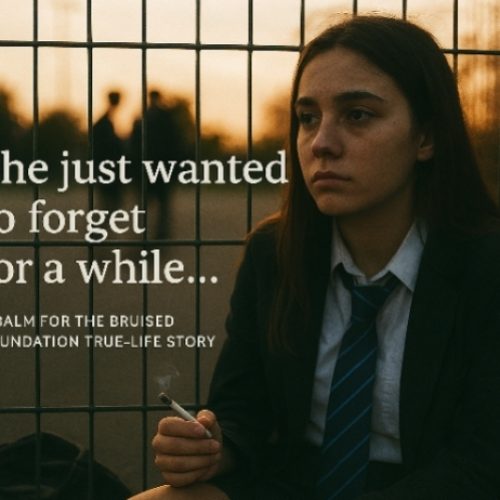
CHASING THE HIGH: ADA’s STORY AND THE SILENT STRUGGLE OF OUR TEENS
CHASING THE HIGH: ADA’s STORY AND THE SILENT STRUGGLE OF OUR TEENS When Ada first lit that roll of cannabis behind the school fence, she wasn’t looking to ruin her

HEALING FROM THE INSIDE OUT – HOW GOOD FOOD BECAME CHIKA’S ’s SECOND CHANCE AT LIFE
HEALING FROM THE INSIDE OUT – HOW GOOD FOOD BECAME CHIKA’S ’s SECOND CHANCE AT LIFE When Chika checked into the rehabilitation centre, she was barely recognisable, thin, pale, and


THE HIDDEN DANGERS OF PRESCRIPTION DRUG MISUSE
THE HIDDEN DANGERS OF PRESCRIPTION DRUG MISUSE A Balm for the Bruised Foundation True-Life Story When Adaobi first held the little white pills in her hand, she didn’t think much
0 Comments
No Comments Yet!
You can be first to comment this post!