

SHADOWS OF EUPHORIA: A MIND LOST TO COCAINE
SHADOWS OF EUPHORIA: A MIND LOST TO COCAINE
The first time Tayo snorted cocaine, he said it felt like heaven cracked open for him.
The rush, the confidence, the sudden burst of light behind his eyes, it was intoxicating.
For a struggling young artist in Lagos, the white powder seemed to silence every insecurity, every voice that told him he wasn’t good enough.
But heaven, he would soon learn, has a way of exacting a toll.
Tayo was twenty-two when a friend introduced him to what he called “creative fuel”.
It started at a nightclub in Lekki, a night drenched in music, flashing lights, and false promises. “Just one line,” his friend said, rolling a note with a grin. “You’ll paint the world in colour.”
And for a while, he did.
His paintings sold faster. His charm grew magnetic. He could go days without sleep, his ideas flowing like a river.
The art community hailed him as a rising genius.
But beneath that brilliance, cocaine had begun its slow, invisible war, one waged in the soft folds of his brain.
It started subtly. He couldn’t remember faces. Conversations slipped through his mind like smoke.
He began losing time, hours slipping away, as if they had been stolen.
His once vibrant paintings grew darker, distorted. He would stare at the canvas, unable to recall what he was creating or why.
By the third year, paranoia had become his muse.
He painted with curtains drawn, convinced that neighbours were spying through cracks in the wall.
His brain’s reward system, hijacked by cocaine, no longer recognised joy in anything but the drug.
The white powder became his god, and he, its trembling worshipper.
Science would later explain what was happening.
Cocaine floods the brain with dopamine, the “feel-good” chemical, and over time, the brain stops producing it naturally.
The result is emotional flatness, depression, and a desperate need to keep chasing that high that never truly returns.
But in real life, the explanation wasn’t so neat. It was chaos.
One night, Tayo woke up in a gutter. He couldn’t remember how he got there.
His head throbbed, his nose bled, and his once steady hands trembled uncontrollably.
He tried to reach for his sketchbook, his lifeline, but even the lines on paper refused to make sense. His brain had turned against him.
Doctors at the rehab centre later confirmed the extent of the damage.
Years of cocaine abuse had altered his brain structure, shrinking the grey matter responsible for memory and decision-making.
He had the cognitive function of a sixty-year-old man, they said. He was only twenty-nine.
The saddest part? He could still remember how it all began, that single night of “creative fuel.”
Today, Tayo works with Balm for the Bruised Foundation, speaking to recovering addicts about the illusions of cocaine.
He carries his story like a scar, visible, painful, but necessary. “It gives before it takes,” he tells them. “But when it takes, it doesn’t stop.”
Cocaine’s long-term effects aren’t always seen in a hospital chart, they live in forgotten dreams, broken families, and the echoing emptiness of once-brilliant minds.
Tayo’s journey reminds us that addiction is not a moral failure but a disease that rewires the very essence of who we are. Yet, with awareness, therapy, and compassion, recovery is possible.
The brain, remarkable in its resilience, can heal, if given time, love, and the courage to begin again.
Now, when Tayo paints, his canvases are different. No longer drenched in chaos, they tell stories of survival. His colours are softer, his strokes slower.
Each painting whispers the same truth: you can rebuild what cocaine tried to destroy.
If this story moved you, share it to raise awareness about drug addiction.
Together, we can help more people find the strength to seek help before it’s too late.
About author

You might also like

The First Sip: Understanding Gateway Drugs and Why They Matter
The First Sip: Understanding Gateway Drugs and Why They Matter The Innocent Beginning Chidi was twelve when he took his first sip of beer. It was a hot Sunday afternoon
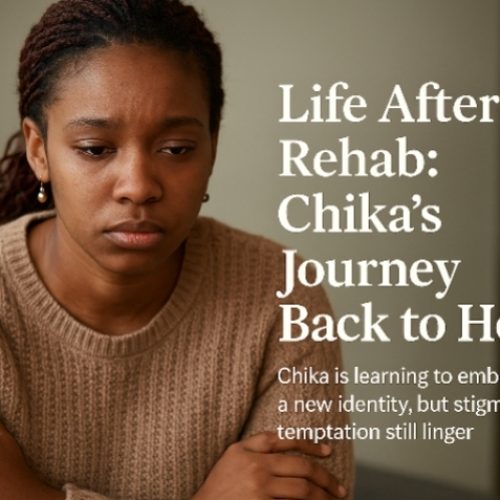
LIFE AFTER REHAB: CHIKA’S JOURNEY BACK TO HOPE
LIFE AFTER REHAB: CHIKA’S JOURNEY BACK TO HOPE When Chika walked out of the rehabilitation centre two years ago, she thought she had conquered the hardest part of her life.


WHEN THE COURT GAVE ME A SECOND CHANCE – NOT A SENTENCE
WHEN THE COURT GAVE ME A SECOND CHANCE – NOT A SENTENCE “I thought my life was over the day the judge said, ‘You’re going to rehab.’” Those were the
0 Comments
No Comments Yet!
You can be first to comment this post!